- Understanding Desertification
- Human Lifestyle and Environmental Pressure
- Deforestation and Loss of Vegetation
- Overgrazing by Livestock
- Unsustainable Agricultural Practices
- Water Mismanagement
- Urbanization and Land Development
- Climate Change and Human Activities
- Soil Erosion and Loss of Fertility
- Impact of Desert Expansion on Human Life
- Global Regions Affected by Desertification
- Preventing Desert Expansion
- Role of Sustainable Lifestyle Choices
- Summary
Deserts are often seen as natural landscapes characterized by dry climates, low rainfall, and limited vegetation. However, the expansion of desert regions around the world is not only a natural process. In many cases, human activities play a major role in accelerating the spread of deserts into fertile lands.
The process by which productive land gradually turns into desert is known as desertification. According to the United Nations Convention to Combat Desertification, desertification affects more than two billion people worldwide and threatens food security, biodiversity, and sustainable development.
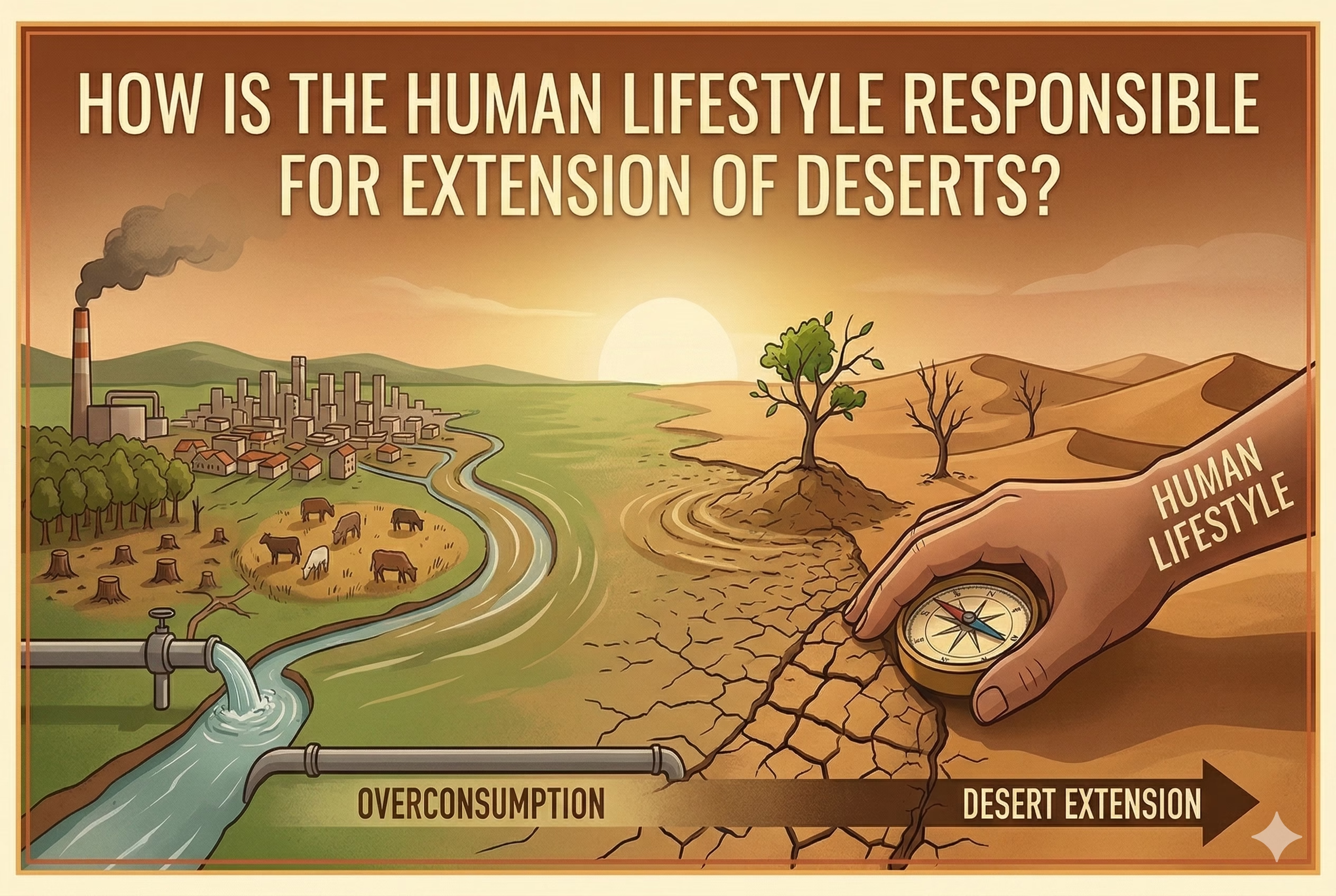
Human lifestyle choices such as deforestation, overgrazing, unsustainable farming, and excessive use of natural resources contribute significantly to the expansion of desert areas. Understanding how these activities affect land ecosystems is important for protecting the environment and maintaining fertile land for future generations.
This article explains how human lifestyle contributes to desert expansion, the environmental impacts of desertification, and the measures that can help prevent further degradation of land.
Understanding Desertification
Desertification refers to the degradation of land in arid, semi-arid, and dry sub-humid regions. It occurs when fertile soil loses its productivity due to a combination of climatic variations and human activities.
Healthy land supports vegetation, retains water, and maintains biodiversity. When desertification occurs, the soil structure breaks down, vegetation disappears, and the land becomes dry and unproductive.
The United Nations estimates that about 24 billion tons of fertile soil are lost each year due to land degradation. Much of this loss is associated with unsustainable land use practices driven by human lifestyle patterns.
Human Lifestyle and Environmental Pressure
Modern human lifestyles have increased the demand for food, fuel, housing, and industrial development. As populations grow, people often exploit natural resources more intensively.
Activities such as excessive agriculture, deforestation, mining, and urban expansion place significant pressure on ecosystems. Over time, these pressures can degrade land and contribute to desert expansion.
In many regions, especially in Africa, Asia, and parts of the Middle East, land degradation has become a serious environmental challenge.
Deforestation and Loss of Vegetation
One of the most significant ways human lifestyle contributes to desertification is through deforestation. Trees and vegetation play a vital role in maintaining soil stability. Their roots hold the soil together, reduce erosion, and help retain moisture.
When forests are cleared for agriculture, construction, or fuelwood, the soil becomes exposed to wind and water erosion. Without vegetation cover, the soil loses nutrients and organic matter. Over time, the land becomes dry and less capable of supporting plant life.
Large-scale deforestation in dry regions can accelerate the transformation of fertile land into desert landscapes.
Overgrazing by Livestock
Overgrazing is another major human-driven factor responsible for the expansion of deserts.
In many rural communities, livestock such as cattle, sheep, and goats depend on natural grasslands for food. However, when too many animals graze in the same area, the vegetation cannot regenerate quickly enough. As grass disappears, the soil becomes exposed and vulnerable to erosion. Wind and rainfall can easily remove the topsoil, which contains essential nutrients needed for plant growth.
Over time, repeated overgrazing can lead to severe land degradation and desert-like conditions.
Unsustainable Agricultural Practices
Agriculture is essential for feeding the global population, but certain farming methods can harm the environment if not managed properly.
Practices that contribute to desertification include:
continuous farming without allowing soil to recover
excessive irrigation that leads to soil salinization
use of heavy machinery that compacts soil
clearing natural vegetation for farmland
When soil nutrients are depleted and erosion increases, agricultural land becomes less productive.
In extreme cases, once fertile farmland may eventually turn into barren desert.
Water Mismanagement
Water resources are critical for maintaining healthy ecosystems. However, human activities often lead to inefficient use of water. Excessive groundwater extraction, poor irrigation systems, and diversion of rivers for agriculture can reduce water availability in dry regions.
When water sources decline, vegetation struggles to survive. The loss of plant cover increases soil erosion and accelerates desert expansion. For example, the shrinking of the Aral Sea in Central Asia has led to large areas of degraded land due to water mismanagement and intensive irrigation.
Urbanization and Land Development
As cities expand, natural landscapes are often cleared for infrastructure, housing, and industrial development. Urban growth can destroy vegetation and alter natural drainage patterns. Construction activities may also compact soil, reducing its ability to absorb water.
When natural ecosystems are disrupted, surrounding land can become more vulnerable to desertification. Urbanization also increases demand for resources such as wood, water, and agricultural products, placing additional pressure on nearby environments.
Climate Change and Human Activities
Climate change is another factor closely linked to human lifestyle that contributes to desert expansion.
Rising global temperatures, changing rainfall patterns, and prolonged droughts affect ecosystems in dry regions. Human activities such as burning fossil fuels and deforestation increase greenhouse gas emissions, which influence global climate systems. When rainfall decreases and temperatures rise, vegetation struggles to survive. The loss of plant cover accelerates land degradation and the spread of desert landscapes.
Soil Erosion and Loss of Fertility
Soil is one of the most valuable natural resources for agriculture and food production. Healthy soil contains nutrients, microorganisms, and organic matter that support plant growth.
Human activities such as deforestation, overgrazing, and poor farming techniques weaken soil structure and increase erosion. Wind erosion can remove large amounts of topsoil from dry regions. Once the fertile layer of soil is lost, it can take hundreds of years to regenerate naturally.
This loss of soil fertility contributes directly to the expansion of deserts.
Impact of Desert Expansion on Human Life
Desertification does not only affect ecosystems. It also has serious consequences for human communities. As productive land disappears, farmers may struggle to grow crops or raise livestock.
This can lead to:
food shortages
loss of income for rural communities
increased poverty
migration to urban areas
The United Nations reports that desertification threatens the livelihoods of millions of people, particularly in regions that rely heavily on agriculture.
Global Regions Affected by Desertification
Desertification affects many parts of the world.
Some of the most vulnerable regions include:
the Sahel region in Africa
parts of China and Mongolia
the Middle East
Central Asia
Australia
In China, the expansion of the Gobi Desert has affected large areas of farmland and rural communities. Governments and environmental organizations are working to restore degraded land through large-scale tree planting and sustainable land management programs.
Preventing Desert Expansion
Although desertification is a serious environmental issue, it can be reduced through sustainable practices.
Some important solutions include:
planting trees to restore vegetation
improving soil conservation techniques
rotational grazing to protect grasslands
efficient water management systems
sustainable agricultural methods
Education and awareness are also important in encouraging communities to adopt environmentally responsible lifestyles.
Role of Sustainable Lifestyle Choices
Individual lifestyle choices can influence environmental sustainability. Reducing waste, conserving water, supporting sustainable agriculture, and protecting natural ecosystems all contribute to healthier landscapes.
Governments, organizations, and communities must work together to promote responsible resource management and environmental protection.
Summary
The extension of deserts is not only a natural process but also a consequence of human lifestyle and environmental pressure.
Activities such as deforestation, overgrazing, unsustainable farming, water mismanagement, and urban expansion contribute significantly to desertification. These practices weaken soil structure, reduce vegetation, and accelerate land degradation.
Protecting land ecosystems requires sustainable resource use, improved environmental policies, and responsible lifestyle choices. By understanding the relationship between human activities and desert expansion, societies can take meaningful steps to preserve fertile land and protect the environment for future generations.